Quick answer: is Miracle-Gro safe on peace lilies?
Yes, Miracle-Gro is safe for peace lilies as long as you dilute it correctly and don't overdo the frequency. Peace lilies (Spathiphyllum) are not heavy feeders, and the biggest mistake people make is treating them like a tomato plant that needs constant fertilizer. Use too much, and you'll end up with brown leaf tips, salt crust on the soil, and a plant that looks worse than before you started. Use it correctly, and a diluted dose every couple of weeks during the growing season gives your plant just enough of a boost to push out new leaves and the occasional flower.
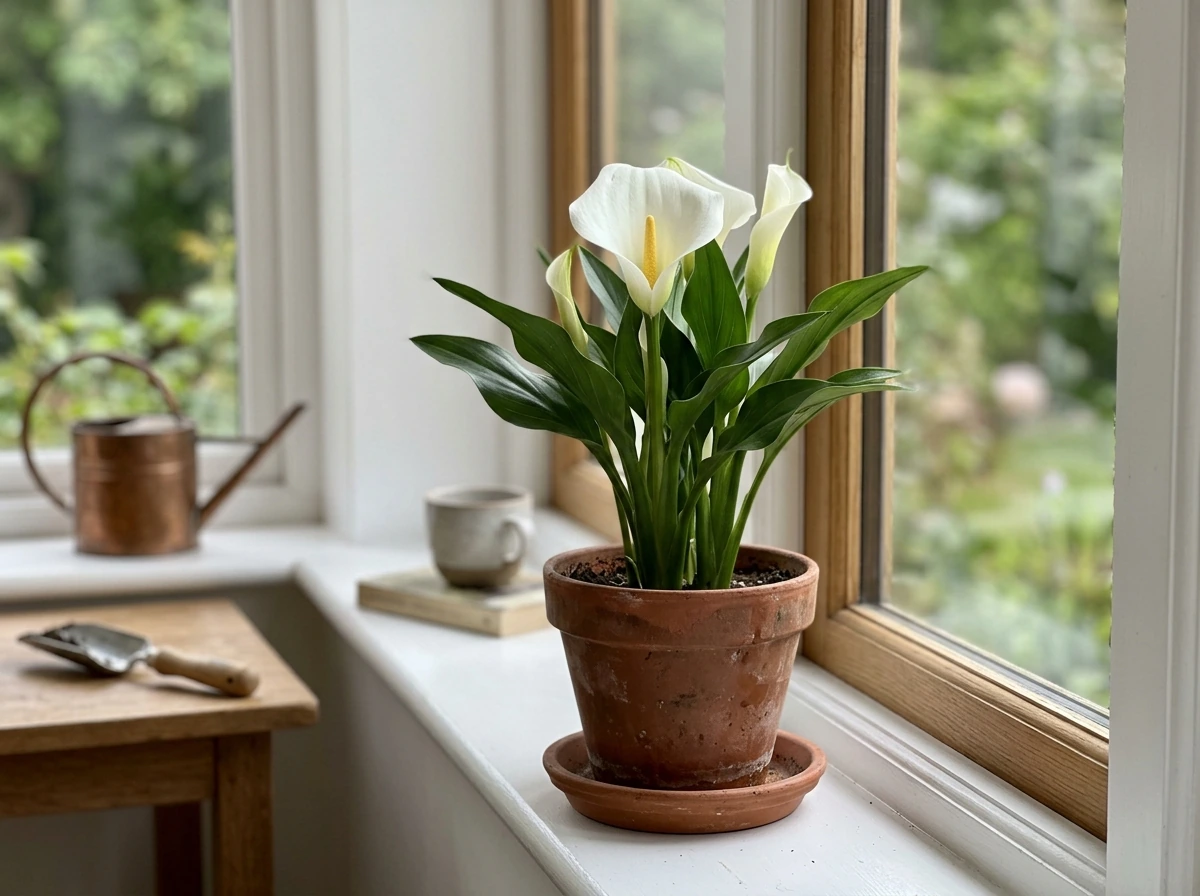
One thing worth knowing: peace lilies aren't true lilies at all. Unlike Asiatic lilies or daylilies, which are outdoor bulb plants with different feeding needs, peace lilies are tropical foliage plants grown almost exclusively indoors (or in shaded outdoor spots in warm climates). That distinction matters because the feeding schedule and product choice for a peace lily should reflect that That distinction matters because the feeding schedule and product choice for a peace lily should reflect that it's a low-light, indoor houseplant, not a garden border plant that gets the full sun and heavy feeding treatment., not a garden border plant that gets the full sun and heavy feeding treatment. can peace lilies grow outside uk
What Miracle-Gro to use (and what to avoid)
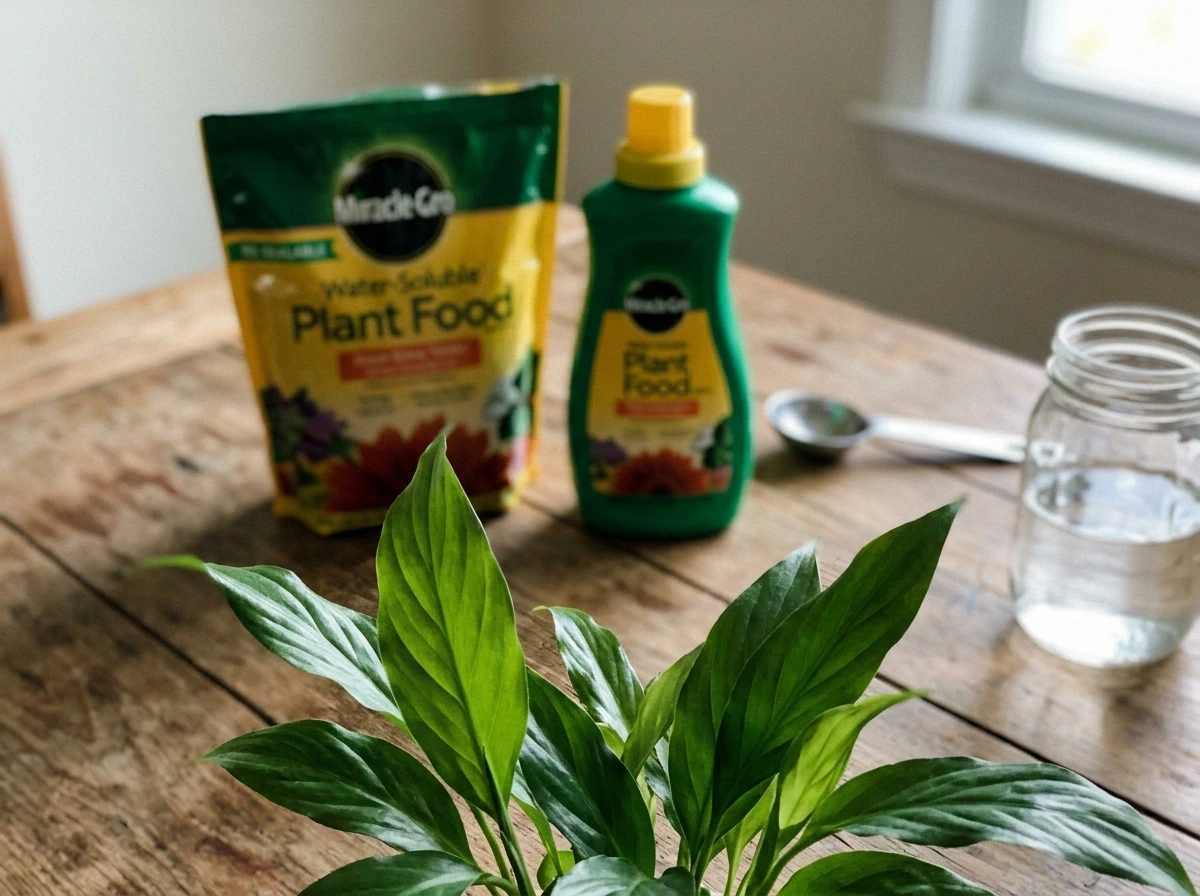
Not every Miracle-Gro product is a good fit here. The three options most likely to come up are the Water Soluble All Purpose Plant Food, the Liquid All Purpose Concentrate, and the LiquaFeed system. All three can work, but the Water Soluble All Purpose Plant Food is the one I'd reach for first. It's an NPK 24-8-16 formula, which means it's higher in nitrogen and potassium than phosphorus. For a peace lily, that nitrogen content is what drives the leafy, green growth you're after. The phosphorus promotes flowering, and the potassium supports overall plant health. It's a decent all-around ratio for a foliage houseplant.
The Liquid All Purpose Concentrate works well too, especially if you prefer a pre-mixed bottle you can just measure from rather than dissolving powder. The LiquaFeed refill option is convenient for outdoor or larger setups but less practical for a single pot on a windowsill.
What to avoid: Miracle-Gro Shake 'N Feed and other slow-release granular formulas are not ideal for peace lilies in pots. They're harder to control, and it's easy to accidentally overload the soil with slow-release pellets that keep delivering nutrients even when the plant has gone dormant or is already stressed. Stick to the liquid or water-soluble versions so you stay in control of the dose.
| Product | NPK | Dilution Rate | Frequency | Best For Peace Lily? |
|---|
| Water Soluble All Purpose Plant Food | 24-8-16 | 1/2 tsp per 1 gallon (indoor use) | Every 7-14 days | Yes, recommended |
| Liquid All Purpose Concentrate | Not published (all-purpose) | 1 tsp per 1 gallon | Every 2 weeks | Yes, works well |
| LiquaFeed All Purpose Plant Food | Not published | ~1.5 tsp per 1 gallon (watering can) | Every 2 weeks | Workable but less precise indoors |
| Shake 'N Feed / Granular | Varies | Slow-release granules | Every 3 months | Avoid for container peace lilies |
How to apply it correctly (rates, frequency, method)
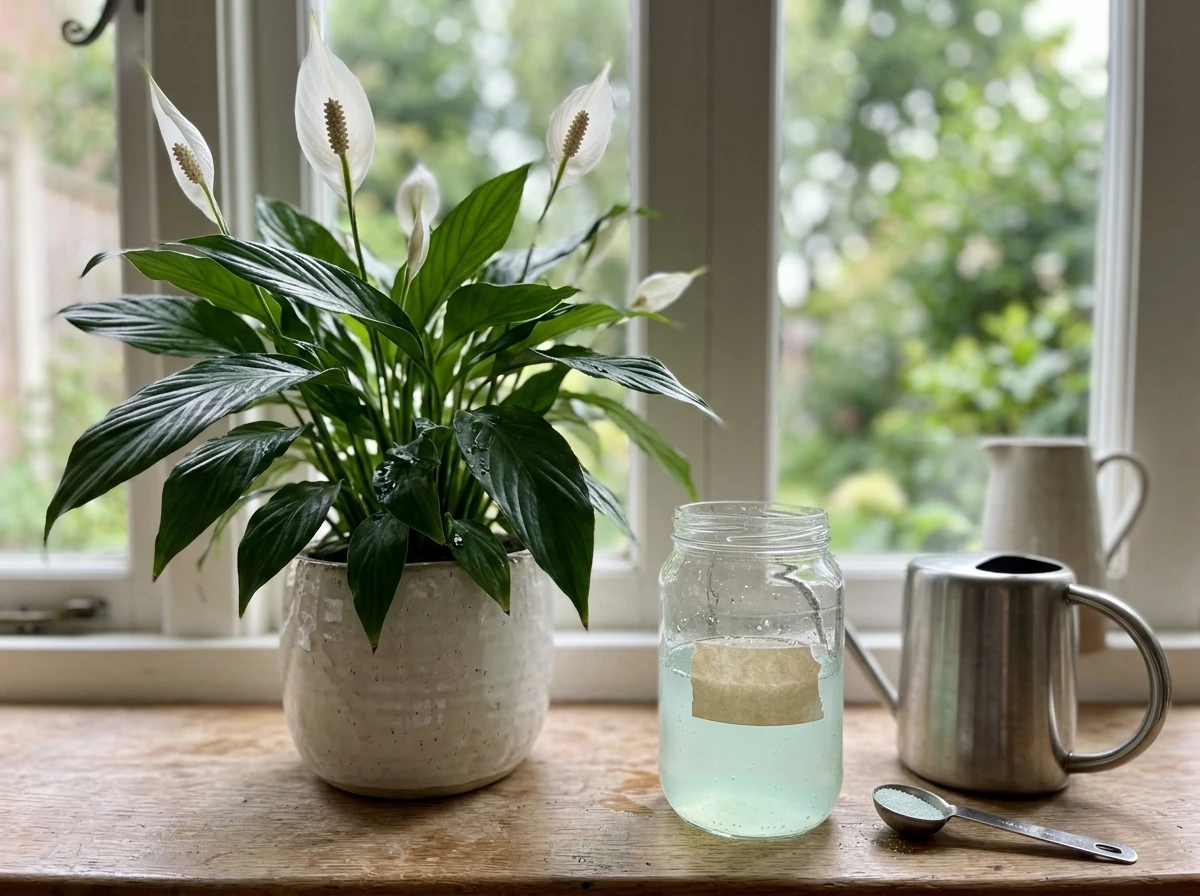
For the Water Soluble All Purpose Plant Food, the indoor rate is 1/2 teaspoon per 1 gallon of water. That's the small end of the scoop that comes with the package. Mix it thoroughly until the powder is fully dissolved, then water the soil with it as you normally would. Don't spray it on the leaves. Soil drench only. The liquid concentrate version is slightly more concentrated at 1 teaspoon per gallon, applied every two weeks.
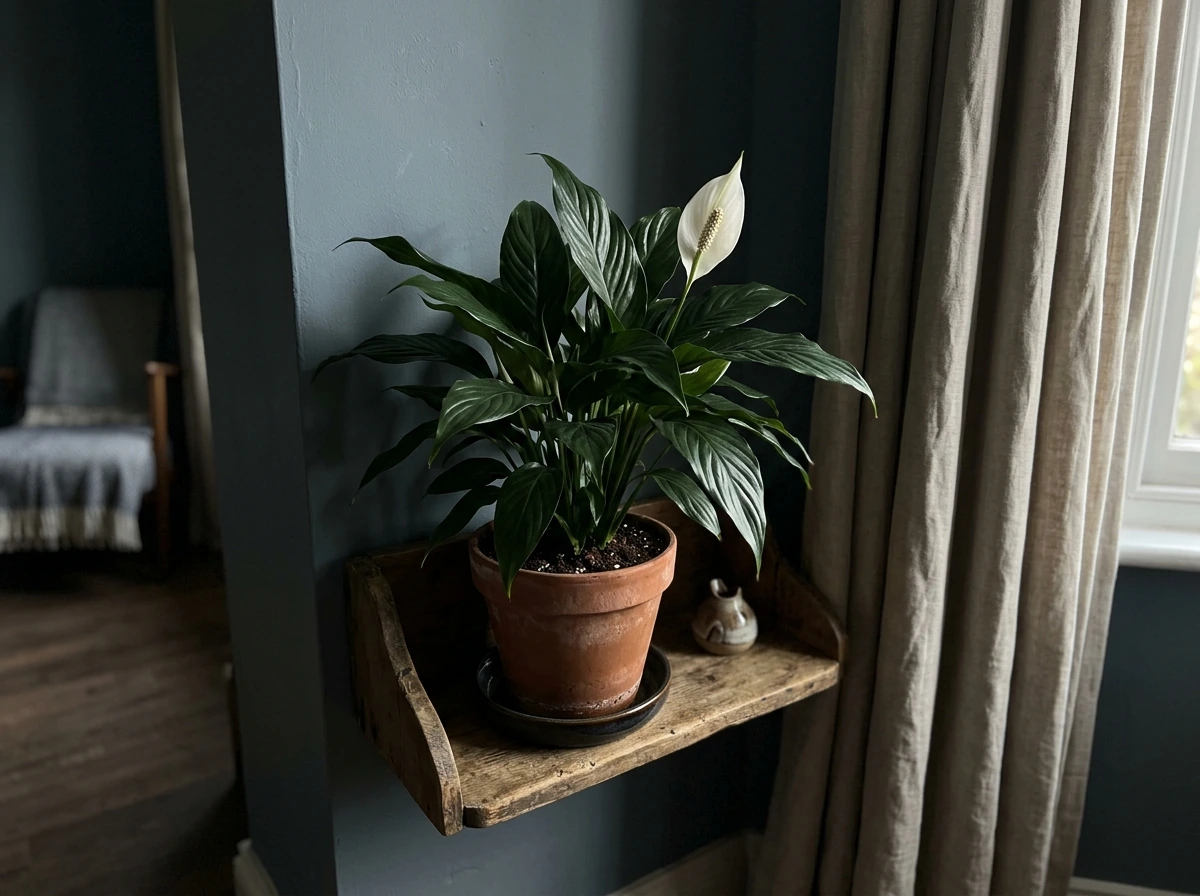
Here's the part most people get wrong: the label says every 7 to 14 days for indoor plants, but for a peace lily I'd push toward the 14-day end of that range, especially in lower-light conditions. A peace lily sitting in a north-facing window or a dim corner isn't growing fast, which means it isn't burning through nutrients quickly. Feeding it every 7 days in those conditions is way too much. Match the feeding frequency to how actively the plant is growing.
- Water the plant with plain water first until the soil is moist but not soaking. Never apply fertilizer to dry soil.
- Mix your Miracle-Gro solution at the correct dilution (1/2 tsp per gallon for the water-soluble formula).
- Pour the diluted solution slowly onto the soil surface until it begins to drain from the bottom of the pot.
- Empty the drip tray after 30 minutes so the roots don't sit in nutrient-rich water.
- Repeat every 14 days during spring and summer. Reduce to once a month (or stop entirely) in fall and winter.
One more thing: only fertilize a peace lily that is actively growing and reasonably healthy. If the plant is wilting from drought, root-bound, or sitting in cold drafts, adding fertilizer won't fix those problems and will likely make things worse. Get the basics right first, then feed.
When feeding helps vs when it causes problems
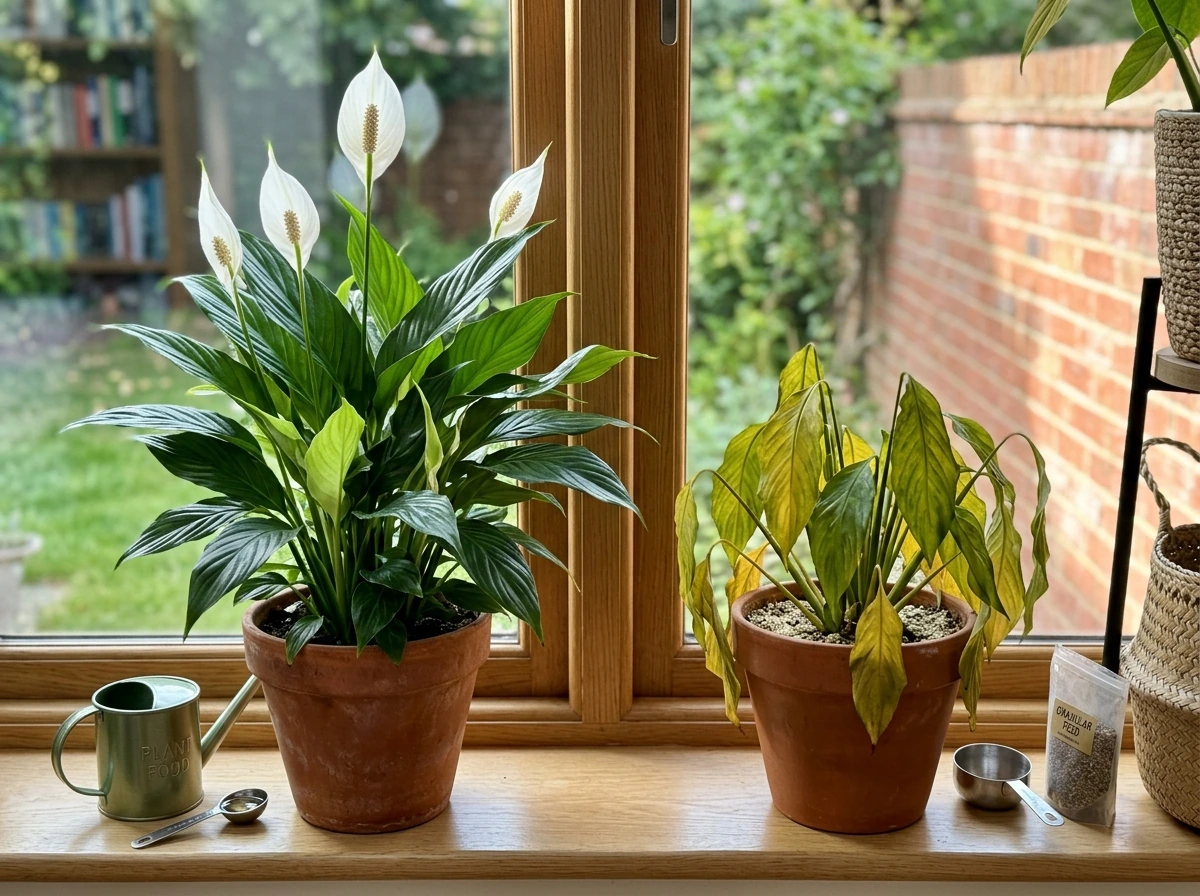
Fertilizing a peace lily helps most in spring and summer, when the plant is actively pushing out new leaves and the days are longer. If your peace lily hasn't bloomed in a while or the leaves look a little washed out and pale, a regular feeding schedule from March through August can make a noticeable difference. I've seen peace lilies that hadn't flowered in two years start producing spathes again within a season after getting consistent, moderate fertilizing combined with better light.
Feeding causes problems in a few specific situations. First, if you're fertilizing in winter when the plant has slowed down, the nutrients just accumulate in the soil instead of being taken up. That leads to salt buildup, which damages the roots over time. Second, if you've been feeding more than once a week or using a stronger concentration than recommended, you're almost certainly going to see tip burn. Third, if the plant is already in poor health from root rot, overwatering, or low humidity, fertilizer won't save it. You'll just be stressing an already stressed plant.
- Feed during active growth: spring and summer (roughly March through August)
- Skip feeding in fall and winter, or reduce to once a month at most
- Never fertilize a wilted, drought-stressed, or root-rotted plant
- Don't increase the concentration hoping for faster results. Stick to the recommended dilution
- Peace lilies grown in very low light need even less fertilizer than those in brighter spots
Troubleshooting fertilizer issues (burn, yellowing, slow growth)
Brown leaf tips
Brown tips on peace lily leaves are one of the most common symptoms of fertilizer burn, and they're also caused by fluoride in tap water and low humidity. If you've been fertilizing regularly and you're seeing crispy brown tips spreading inward, salt buildup is likely the culprit. The fix is to flush the soil: water the pot heavily with plain, room-temperature water, letting it pour out the drainage holes for a few minutes. Do this two or three times in a row to push the accumulated salts out. Then hold off on fertilizing for at least four to six weeks.
Yellowing leaves
Yellow leaves after fertilizing can mean a couple of things. If the whole leaf is yellowing, it's more likely overwatering or root damage than fertilizer toxicity. If the leaves are yellowing between the veins while the veins stay green (called chlorosis), that can actually indicate a nutrient deficiency, specifically iron or magnesium. In that case, switching to a fertilizer formulated for houseplants with micronutrients, or supplementing with a diluted epsom salt solution (1 teaspoon per gallon, applied once a month), can help. But always rule out watering issues first.
Slow growth despite regular feeding
If you're feeding consistently and the plant still isn't growing, fertilizer is almost never the actual problem. Peace lilies are slow-growing plants to begin with, Peace lilies are slow-growing plants to begin with, but the most common reasons for a complete growth stall are: too little light, being severely root-bound, or low temperatures. Peace lilies prefer temperatures between 65 and 85 degrees Fahrenheit and do best in bright indirect light, not deep shade. If your plant is sitting far from any window, consider moving it closer or exploring grow lights before adding more fertilizer, do peace lilies like grow lights? Adding nutrients to a plant that can't use them because of poor light or cold is just wasted effort.
Best next steps: alternative feeding and peace lily care checklist
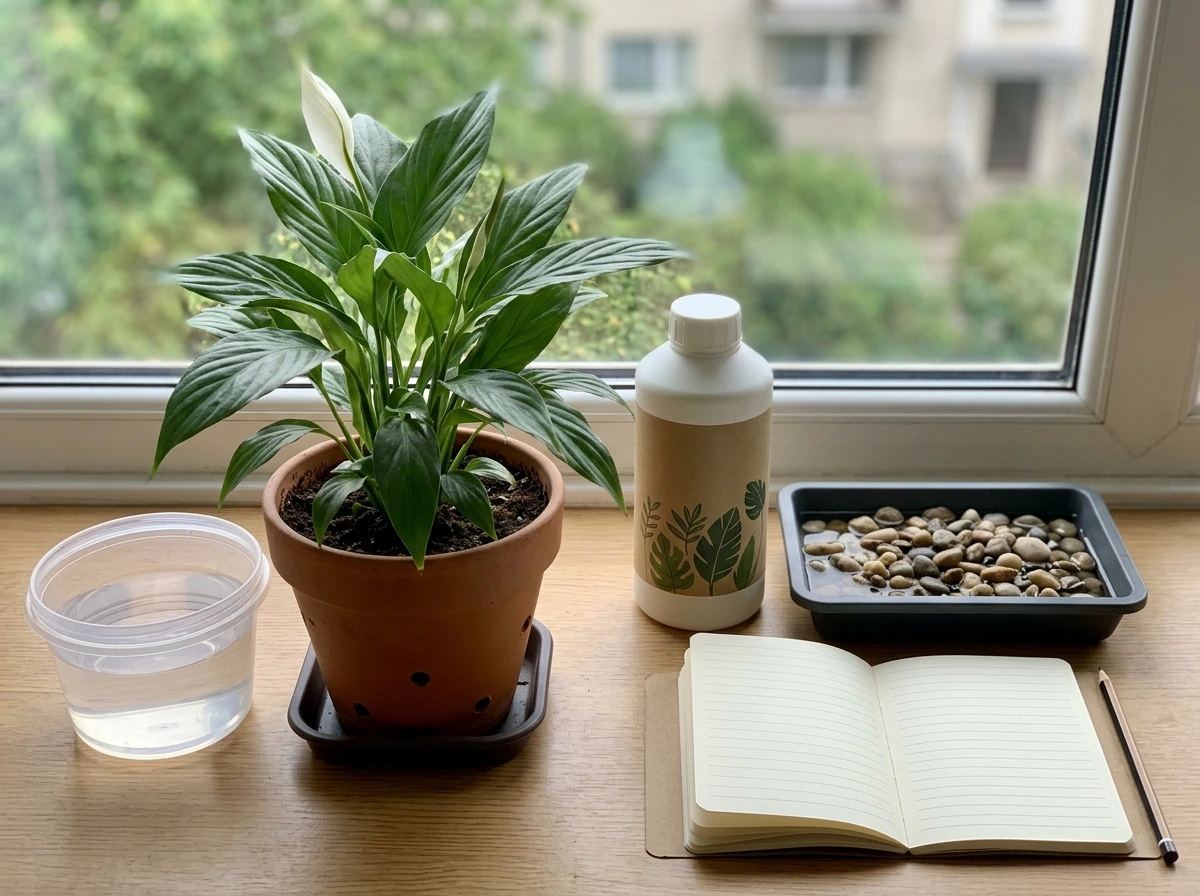
Miracle-Gro works fine for peace lilies when used correctly, but it's not the only option and frankly not always the best one for a hands-off houseplant grower. A balanced liquid fertilizer formulated specifically for houseplants, something with an NPK closer to 10-10-10 or even lower, gives you a gentler, more forgiving feeding option. Brands like Jack's Classic All Purpose 20-20-20 (used at half the recommended rate) or Espoma Indoor! Liquid Plant Food are popular alternatives that are harder to over-apply. Fish emulsion, diluted heavily, is another organic option that feeds slowly and is nearly impossible to burn with.
If your peace lily is struggling right now and you're tempted to reach for fertilizer as a fix, I'd encourage you to run through this checklist first. More often than not, the real issue is something other than nutrition.
- Light: Is the plant getting bright, indirect light for at least 6 to 8 hours a day? Peace lilies tolerate low light but grow best with more. Moving it closer to a window is the single highest-impact change you can make.
- Watering: Is the top inch of soil drying out between waterings? Peace lilies prefer consistently moist soil but hate sitting in water. Root rot is far more common than drought stress.
- Humidity: Is the air around the plant reasonably humid? Peace lilies thrive above 50% humidity. Dry indoor air in winter is a common cause of brown tips and slow growth.
- Pot size: Is the plant root-bound? If roots are circling the bottom or pushing out of the drainage hole, repotting into a container one size up will do more than any fertilizer.
- Temperature: Is it staying above 60 degrees Fahrenheit consistently? Cold drafts from windows or air conditioning vents stress the plant significantly.
- Fertilizing: If all the above look good, start a feeding routine with diluted Miracle-Gro Water Soluble (1/2 tsp per gallon) every 14 days from spring through summer. Stop or reduce in fall and winter.
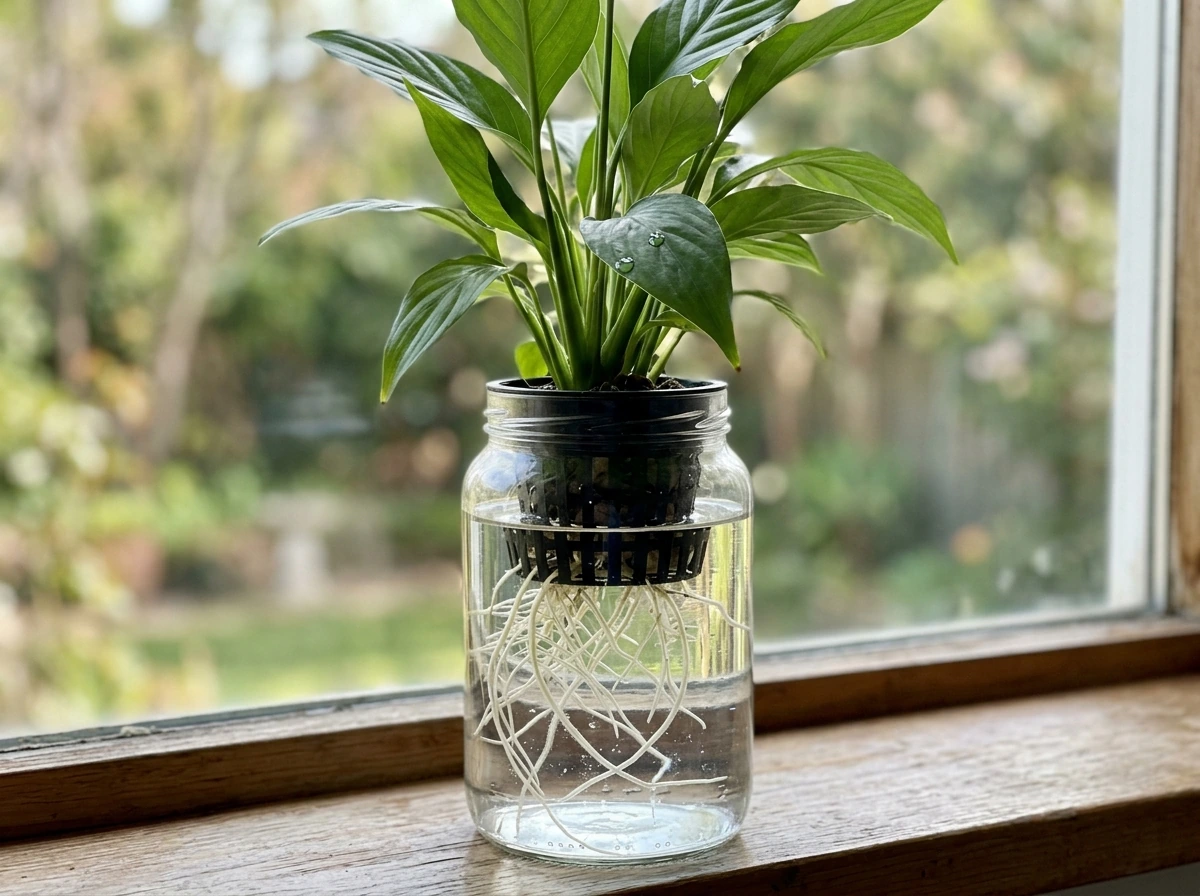
Peace lilies are genuinely forgiving plants once you understand what they actually need. I've grown them in apartments with minimal natural light, Peace lilies are genuinely forgiving plants once you understand what they actually need. I've grown them in apartments with minimal natural light, in bathrooms for the humidity, and even experimented with water-only growing setups, so if you're wondering will peace lilies grow in water, start by getting the environment right first., and even experimented with water-only growing setups, so if you're wondering will peace lilies grow in water, start by getting the environment right first. In every case, feeding played a supporting role, not a starring one. Get the environment right first, then use Miracle-Gro or any balanced fertilizer as the finishing touch, not the rescue plan.